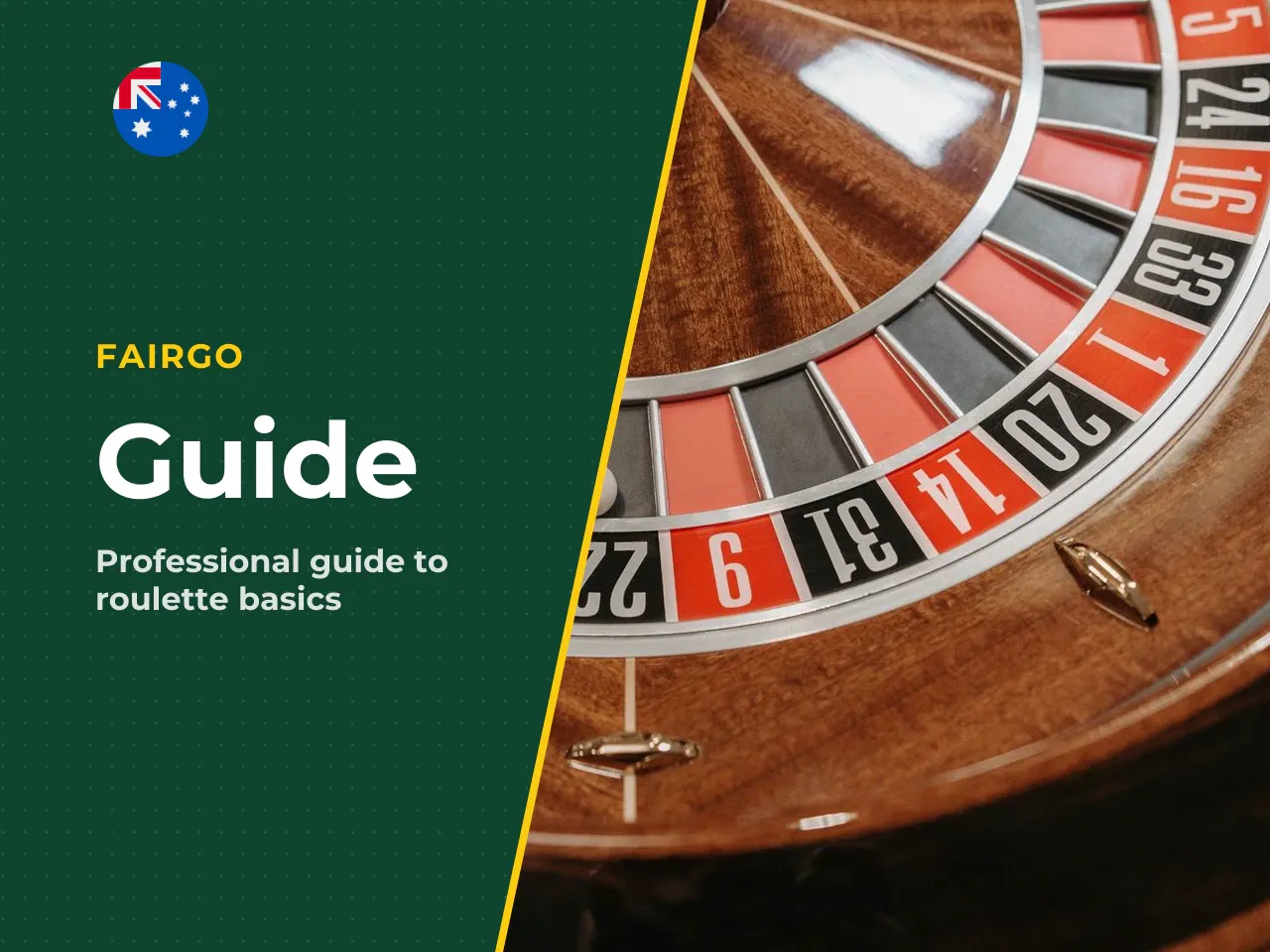
Online Roulette in Australia: Rules, Bets, Odds, Demo Play and Real Money Explained

Last updated: February 2026 · Reviewed by: the iGaming editorial team

Roulette looks simple, and that is exactly why it gets misread. One wheel, one ball, thirty-seven pockets, and a payout table that has not changed in a century. The maths underneath it, though, decides whether a session costs you 1.35% of turnover or 7.69%. That gap is the whole story.

This guide walks through the roulette rules, every bet and payout, the difference between demo and real money play, what live dealer roulette actually requires from your connection, and where Australian law sits. No hype. Just the numbers and the restrictions, in plain English.

Online Roulette in Australia Rules, Bets

The 60-second version

  • The rules never change. Whether you spin a certified RNG wheel, sit at a live-streamed table, or play in a land-based venue, the objective is identical: predict the numbered pocket the ball settles into. Payouts, bet names and table geometry are standardised worldwide.
  • The wheel variant decides your maths. European (single zero) carries a house edge of 2.70%. French (single zero plus La Partage) drops to 1.35% on even-money bets. American (0 and 00) rises to 5.26%. Triple-zero wheels, including The Venetian's exclusive third zero marked with a 'V', sit at a punishing 7.69%.
  • Payouts are fixed. Straight up 35:1, split 17:1, street 11:1, corner 8:1, six line 5:1, dozens and columns 2:1, red/black, odd/even and high/low 1:1.
  • Live dealer roulette needs bandwidth. Budget 4 Mbps minimum, 12 Mbps recommended, and keep ping under 100 ms so your chips register before "no more bets".
  • Legally, the operator carries the risk, not you. Under the Interactive Gambling Act 2001, enforcement targets providers. Australians are not prosecuted for playing at offshore sites, but the games themselves are prohibited services, and credit cards and digital currencies have been banned for interactive wagering since 11 June 2024.
  • No betting system beats the house edge. Martingale, Fibonacci and D'Alembert redistribute risk across time. They cannot convert a negative expectation into a positive one.
The 60-second version. - The rules

Important: This guide is general information based on academic and regulatory sources. It is not legal, financial or medical advice. Online casino games, including roulette, are prohibited interactive gambling services for people physically located in Australia under the Interactive Gambling Act 2001. Gambling involves risk. 18+ only.

1. What roulette is and how the wheel and table are built

Roulette is a game of chance documented in France in the eighteenth century, with the modern wheel-and-layout format standardised across European casinos during the nineteenth century. The name means "little wheel", and the appeal has barely shifted in 250 years: large payouts are available from very small wagers. That single feature is why the game pulls in complete beginners and hardened high rollers at the same table.

Three physical components matter.

1.1 The wheel, the ball and the betting layout

The roulette wheel. A rotating rim carries numbered pockets around its circumference. Numbers alternate red and black in a deliberately non-sequential order, designed to spread high, low, odd and even numbers evenly around the rim. Zero, and on American wheels double zero, is green. The standard single-zero wheel has 37 pockets, the American double-zero wheel has 38, and triple-zero formats have 39.

The ball. Launched against the direction of the rim, it loses energy through friction, clips the deflectors, then drops. Nothing about that sequence is predictable in practice, which is the point.

The roulette table. A rectangular grid reproduces the numbers 1-36 in three columns of twelve, with zero (and 00) at the head. Bets placed inside that grid, on individual numbers or small clusters, are inside bets. Bets placed in the bordered boxes outside the grid, covering colour, parity, ranges, dozens and columns, are outside bets. Chip placement defines the wager: a chip on the line between two numbers is a split, a chip at the intersection of four numbers is a corner, and so on.

The dealer (croupier). The dealer opens betting, closes it, launches the ball, announces the winning number, marks it with the dolly, clears losing chips and pays winners at fixed odds. In a land-based venue, each player is responsible for positioning their own wager correctly on the layout, regardless of whether the dealer or the player physically places the chip.

If you are reading a table diagram for the first time, orient yourself with four zones.

1.1 The wheel, the ball and
ZoneWhat it containsBet type
The wheel37/38/39 numbered pockets, separate from the layoutOutcome generator
Number fieldIndividual squares 1-36 plus 0 (and 00)Inside bets
Side boxes1st 12 / 2nd 12 / 3rd 12, and 2:1 column boxesOutside bets
Bottom railRed/Black, Odd/Even, 1-18 / 19-36Outside bets (even money)

[Media placeholder: schematic diagram of a roulette table, labelling the wheel, the number field, and the inside bets and outside bets zones. Text labels in the DOM; alt text includes the phrase "roulette table".]

1.2 European roulette and American roulette: the key differences

Same layout, same payout table, different pocket count. That is the entire difference, and it is worth more to your bankroll than any staking plan.

European roulette runs one green zero across 37 pockets. A straight-up number wins 1 time in 37, and the casino keeps 2.70% of every dollar wagered over the long run.

American roulette adds a second green pocket, 00, taking the wheel to 38 pockets. The payouts stay at 35:1, 17:1, 11:1 and so on, so the extra pocket is pure cost. The edge rises to 5.26%, close to double. It also carries one bet that does not exist on a single-zero layout, the five-number basket, which is the worst wager on the floor.

French roulette uses the European wheel plus a zero-refund rule on even-money bets. More on that in section 5.

Practical takeaway: if a lobby shows both a European and an American table at the same stake, the choice is already made for you.

1.2 European roulette and American roulette

2. Roulette rules: how a single round plays out

Every roulette round, online or offline, RNG or live, follows the same six-phase cycle.

2.1 How to place your bets before the spin

  1. Choose your chip denomination. Click the chip value you want on the control panel. Online tables commonly run from A$0.10 up to A$1,000+ per position.
  2. Place your bets during the betting window. Chips may only sit on marked betting positions. Inside bets go on or between numbers, outside bets go in the bordered side and bottom boxes. Want more bets on the layout? Add them, as long as the window is still open and you respect the per-position maximum.
  3. Betting closes. In RNG roulette you trigger this yourself by pressing Spin. In live roulette the dealer announces "No more bets" with a hand gesture, and the software locks the layout.
2.1 How to place your bets

2.2 What happens after "no more bets"

  1. The wheel and ball are launched. The ball loses energy through friction, contact with the deflectors and interaction with the rotating rim. The pocket it finally settles in is determined by that combination of launch speed, trajectory and timing.
  2. The winning number is confirmed. The dealer, or the software, declares the number, its colour and its parity, then marks it on the layout with the dolly.
  3. Settlement. Losing chips are cleared. Winning bets are paid at the fixed odds for that bet type. Online, this is automatic and credited to your balance before the next betting window opens.

A practical note on timing. Live tables run on a clock, typically 15 to 25 seconds of betting time per round for standard tables, and as little as 12 to 15 seconds for speed variants. If your connection lags, your chip may not register before the lock. That is why the bandwidth section below matters more than most guides admit.

[Media placeholder: numbered checklist of a roulette round. Choose a chip value, place your bets, wait for "no more bets", watch the result, check the payout. Rendered as an ordered list with full text steps.]

2.2 What happens after no more

3. The complete bets, payouts and probability reference

This is the table most players actually come for. Payout ratios are constant across variants. Only the probabilities change, because the denominator changes with the number of pockets.

Bet classNameNumbers coveredPayoutWin chance (European, 1 zero)Win chance (American, 2 zeros)
InsideStraight Up1 number35:12.70%2.63%
InsideSplit2 adjacent17:15.41%5.26%
InsideStreet3 in a row11:18.11%7.89%
InsideCorner / Square4 meeting at a point8:110.81%10.53%
InsideSix Line6 numbers (2 rows)5:116.22%15.79%
InsideBasket / Top Line0-00-1-2-36:1n/a (American only)13.16%
OutsideColumn12 numbers (a column)2:132.43%31.58%
OutsideDozen12 numbers (1-12, 13-24, 25-36)2:132.43%31.58%
OutsideRed / Black18 numbers1:148.65%47.37%
OutsideOdd / Even18 numbers1:148.65%47.37%
OutsideHigh / Low (1-18 / 19-36)18 numbers1:148.65%47.37%

[Media placeholder: responsive comparison table of roulette bets, grouped by inside bets and outside bets, with table zone, numbers covered and payout logic. Marked-up as a table with caption, head and body.]

3.1 Inside bets on numbers and clusters of numbers

Inside bets are the high-variance side of the layout. A straight up on a single number pays 35:1 and lands roughly once in 37 spins on a European wheel, so long dry runs are normal rather than unlucky. Splits, streets, corners and six lines step down the payout as coverage widens: 17:1 across two numbers, 11:1 across three, 8:1 across four, 5:1 across six.

The pattern is mechanical. More numbers covered, smaller payout, steadier results. What it does not change is the cost per dollar wagered.

3.2 Outside bets for playing groups of numbers

Outside bets cover twelve or eighteen numbers at a time. Dozens and columns pay 2:1 and win about a third of the time. Red/black, odd/even and high/low pay 1:1 and win 48.65% of spins on a single-zero wheel. Not 50%. The green pocket takes the difference, and that difference is the house edge.

Even-money bets are where most cautious players start, and where French tables give you the only genuine discount in the game.

3.3 Reading the numbers properly

The expected value of any single wager is what makes roulette a casino game rather than a coin toss. For a straight-up bet on a European wheel:

E = 35 × (1/37) − 1 × (36/37) = −1/37 = −2.70%

For an even-money bet on the same wheel:

E = (18/37) − (19/37) = −1/37 = −2.70%

Notice that the result is identical. Every bet on a European wheel, with the single exception of French even-money bets under La Partage, carries the same 2.70% edge. Choosing straight up over red/black changes your volatility dramatically. It does not change your long-run expectation by a single basis point.

A correction worth flagging. Several large roulette guides state the European edge as "around 2.65%" and the American edge as "5.3%". The precise figures are 1/37 = 2.70% and 2/38 = 5.26%. If a site cannot get the two headline numbers right, treat its strategy advice with proportionate scepticism.

3.3 Reading the numbers properly. The

3.4 The five-number trap

On American wheels only, the basket bet (0-00-1-2-3) pays 6:1. Its true odds are 5/38, which produces a house edge of 7.89%, the worst wager available on a standard American layout. Skip it. There is no version of the argument where it makes sense.

  1. Roulette variants and the mathematics of house edge

One genuine advantage of playing at an online casino rather than a land-based venue is the sheer number of roulette games available, several of which you will never find on a physical floor.

  • European Roulette. 37 pockets (0 and 1-36). House edge 2.70%, RTP 97.30%. The default sensible choice.
  • French Roulette. 37 pockets, plus La Partage (half your even-money stake returned on zero) or En Prison (the stake is held for the next spin). Even-money house edge falls to 1.35%, RTP 98.65%, the best standard roulette in existence.
  • American Roulette. 38 pockets (0, 00, 1-36). House edge 5.26%, RTP 94.74%. Nearly double the cost per spin for identical entertainment.
  • Triple-Zero Roulette, including The Venetian's 'V' wheel. 39 pockets. House edge 7.69%, RTP 92.31%. Never play this for real money if a single-zero table is available.
  • Mini Roulette. A reduced wheel numbering 1-12 plus a single zero. Payouts are scaled down, and half the stake is typically returned when zero lands. The compressed wheel still raises the edge to roughly 7.69% despite that refund.
  • Multi-Ball Roulette. Up to 10 balls in play at once. Because no two balls can occupy the same pocket, coverage improves, but payouts are cut proportionally to compensate.
  • Multi-Wheel Roulette. Up to 8 single-zero wheels spinning independently, with your bet replicated across all of them. Bankroll burn rate multiplies accordingly.
  • Lightning, Xtra and Multiplier Roulette. After "no more bets", a random selection of 4 to 5 numbers receives random multipliers. Land-based versions run from 30:1 up to 200:1. Online live versions such as Lightning Roulette and Mega Roulette advertise multipliers up to 500x, with bonus-round formats reaching 10,000x on straight-up bets. The trade-off is explicit: straight up pays 30:1 instead of 35:1, which lifts the house edge to roughly 2.99% in exchange for the multiplier lottery.
4. Roulette variants and the mathematics

4.1 Variant selection cheat sheet

VariantPocketsHouse edgeRTPVerdict
French (even money, La Partage)371.35%98.65%Best available
European372.70%97.30%Solid default
Lightning / Xtra37~2.99%~97.10%Entertainment premium
Multiplier bonus formats372.7-4%variesRead the paytable
American385.26%94.74%Avoid if possible
Mini13~7.69%~92.31%Avoid
Triple Zero / 'V'397.69%92.31%Avoid
American basket betn/a7.89%92.11%Worst single bet

  1. Special rules: La Partage, En Prison and the racetrack bets

La Partage ("the sharing") applies to even-money outside bets on French tables. When the ball lands in zero, you forfeit exactly half your stake instead of all of it. Across a long session that halves the effective cost of the zero on those bets, which is where the 1.35% figure comes from.

En Prison ("in prison") is the alternative treatment. Rather than returning half, the casino freezes your even-money stake for one further spin. Win the next spin and the stake is released untouched. Lose it and the whole wager is gone. Mathematically, En Prison produces the same 1.35% long-run edge as La Partage, but it delays the outcome and increases variance.

One caveat worth checking in the game rules: some tables apply these rules only to specific even-money bets, and a few apply them to nothing at all while still calling themselves "French". Open the rules panel. It takes ten seconds.

Racetrack, or call, bets appear on French and many European live tables as an oval betting track that mirrors the physical order of pockets on the wheel:

  • Voisins du Zéro (neighbours of zero), 17 numbers around zero, 9 chips.
  • Tiers du Cylindre (a third of the wheel), 12 numbers opposite zero, 6 chips.
  • Orphelins (orphans), the 8 numbers left over, 5 chips.
  • Jeu Zéro, the 7 numbers closest to zero, 4 chips.
  • Neighbours / Voisins, a chosen number plus the two pockets either side of it on the wheel, 5 chips.

Racetrack bets are simply pre-packaged combinations of splits, straights and corners. They do not alter the house edge. They change how your chips are distributed physically around the wheel, which is a comfort feature rather than an advantage.

5. Special rules La Partage, En

6. Roulette online: demo, RNG and real money

Free roulette, variously labelled demo, practice or fun mode, runs the same game engine as the real money version. Only the balance is different: virtual credits instead of your own funds.

6.1 Roulette demo and free roulette for learning the rules

Demo play exists for three legitimate purposes.

  1. Learning the layout without misplacing a chip that costs you money.
  2. Testing the interface. Bet-repeat buttons, favourite-bet presets, autoplay caps, statistics panels and racetrack behaviour all differ between suppliers.
  3. Verifying variant details. Whether a table actually applies La Partage, what the multiplier paytable pays, and what the minimum and maximum stake per position is.

What roulette demo cannot do is prepare you psychologically for real stakes, and the research here is uncomfortably clear.

"Participation in simulated casino games predicted frequency of real money gambling, after controlling for age, gender, income and education." Fiedler et al., simulated and monetary gambling convergence study (2024), cited in Hing et al., New Zealand Ministry of Health report. https://www.health.govt.nz/publications/convergence-simulated-monetary-gambling

So free play is not a neutral sandbox. On a German sample, engagement with simulated casino games predicted the frequency of real money wagering even after demographic variables were controlled for. Roulette-style mechanics also appear well outside gambling contexts now, in random reward wheels and loot-box spin features in video games, although the strength of that specific pathway still needs dedicated data.

6.2 Fact check: RNG and live results follow the same rules

Verification note. In RNG roulette, the outcome comes from a certified random number generator that regulators and testing houses assess for statistical randomness, unpredictability and non-repeatability. In live roulette, the outcome comes from a physical spin, captured by cameras and optical recognition. The probability structure of each bet is identical in both. What changes is the generation mechanism, the auditing method and the pace of play. Format does not rewrite roulette rules, and no format makes the green zero disappear.

Pace deserves a line of its own. An RNG table can deliver 60 or more spins an hour if you let it, while a standard live table runs closer to 40. Same edge per spin, different cost per hour. That arithmetic catches people out more often than any bet type does.

  1. Live dealer roulette: how it works and what you need

Live dealer roulette is the closest thing to a physical casino table you can reach from a couch in Perth. On screen you get the familiar digital betting layout, plus a real-time video stream of a croupier spinning an actual wheel in a studio or licensed venue. You place chips digitally, the dealer waves off betting, launches the ball and announces the result out loud. Optical character recognition reads the winning pocket and pushes it to the software, which settles every seat at once.

Because a human runs the round, you cannot rush it. The wheel spins when the dealer is ready, not when you press a button. Most studios include a text chat window so you can talk to the dealer and, at some tables, to other players.

7. Live dealer roulette how it

7.1 System and connection requirements for live roulette

For stable Full HD streaming without dropped bets, check the following:

  • Minimum internet speed: 4 Mbps for a standard definition stream.
  • Recommended speed: 12 Mbps or more for HD and Full HD at higher frame rates.
  • Acceptable ping: under 100 ms. Above roughly 150 ms your chip placement may arrive after the "no more bets" lock and be rejected.
  • Device: any modern HTML5 browser, Chrome, Safari, Firefox or Edge, on desktop, tablet or phone. Native apps exist but are not required.
  • Camera: not required. The video feed is one-directional, from the studio to you. The dealer cannot see you.
  • Mobile: on 4G or 5G, prioritise signal stability over raw speed. A fluctuating connection causes more rejected bets than a consistently modest one.
7.1 System and connection requirements for

7.2 Is the stream really live?

Some guides claim outright that "the live dealer is really just a pre-recorded video feed". That claim is only true of unlicensed, unregulated sites. Established live suppliers, Evolution, Pragmatic Play Live, Playtech, Ezugi, Vivo Gaming and Real Dealer among them, broadcast in genuine real time from audited studios. You can verify it yourself in under a minute:

  • Type something in the chat and see whether the dealer responds by name or acknowledges it verbally.
  • Watch the on-screen round ID and timestamp increment continuously.
  • Check that the results history matches what you just watched, spin for spin.
  • Look for a visible studio clock, or a dealer changeover announcement at shift intervals.
7.2 Is the stream really live

7.3 Betting limits at live tables

Online tables are dramatically more accessible than land-based ones. Where a physical table in a major venue may open at A$10 to A$25 per spin, online tables commonly accept A$1 or less. Because live studios also attract high rollers, the ceilings sit higher: maximums of A$500 to A$1,000+ per position are routine, and dedicated VIP and Salon Privé tables run far above that.

Always check the per-position and per-bet-type betting limits in the table info panel before you sit down. The maximum on straight-up bets is usually a small fraction of the maximum on red/black, which quietly caps any recovery plan you had in mind.

7.3 Betting limits at live tables

  1. Land-based table etiquette and coloured chips

If you move between online and physical tables, a handful of floor conventions catch people out.

Every player at a roulette table uses a different colour of chip, so wagers cannot be confused. These are table-specific chips, not casino-wide cash chips, and their value is set by what you paid for them at buy-in. Two players can hold the same colour at different tables with completely different denominations.

Redeem your chips at the same table where you bought them. Once you leave, nobody can verify what they were worth. Buy in between spins, placing your cash on the layout rather than handing it to the dealer. Do not touch chips after "no more bets"; reaching across the layout mid-spin earns you a swift correction. And remember that you own your bet placement: even when the dealer stacks chips for you, correct positioning is your responsibility.

Tipping the croupier is customary in North American venues, less so in European and Australian ones.

The online equivalents of all this are baked into the software. Chip colours are assigned automatically, the layout locks itself, and settlement is instant.

8. Land-based table etiquette and coloured

9. Choosing a roulette casino and reading the offer properly

Reliability screening comes down to four verifiable parameters, plus a short list of red flags.

9.1 What to check in a roulette casino before you play

ParameterWhat to verifyWhy it matters
LicenceCurrent licence number, issuing regulator and jurisdiction, checked against the regulator's own registerDetermines whether player funds and disputes have any external supervision
Game providersNamed suppliers in the lobby and terms, breadth across RNG and liveProvider breadth indicates genuine content, not white-labelled clones
Betting limitsMinimum and maximum stake per position, per round and per session, from the game rulesDecides whether the table fits your bankroll and your staking plan
Payout speedProcessing time in hours or business days, listed separately for crypto, e-wallets, cards and bank transferMethod-specific timings differ enormously

Additional checks that are specific to roulette:

  • The game page should publish the RTP and rule set for the exact variant, because RTP shifts with wheel type, side bets and multiplier mechanics.
  • Confirm both free roulette and real money tables are available, and check whether roulette live dealer tables are open to your account tier and country.
  • Payments must be handled to PCI-DSS standards, with SSL/TLS encryption across every page, not just the cashier.
  • Read the terms and conditions for maximum-win caps, dormant-account fees and bonus-abuse clauses before depositing.
  • Common offshore licences you will encounter include Malta (MGA), Curaçao (CGB), Anjouan and Tobique. These are not equivalent in rigour. MGA offers the most developed complaints and player-funds framework, while the others vary considerably.

Red flags: no licence details in the footer; RTP figures absent from every game; a live "dealer" who never responds to chat; withdrawal terms that require you to contact support to request a payout; bonus terms that ban table games entirely without saying so on the promotional page.

Additional checks that are specific to

9.2 How to judge whether an offer is worth anything for roulette play

An offer only matters after you match it to how you actually play. Three questions settle it.

Does the promotion allow table games at all, or is it slots-only? Does roulette contribute to wagering, and at what weighting? And is there a maximum bet cap that makes your usual stake non-compliant?

If the answers are "slots-only", "5%" and "A$5", the offer is not for a roulette player. That is not a scandal, it is just product design. Plenty of people take the bonus anyway, then discover the weighting clause halfway through. Better to read it first and play unrestricted cash instead. Section 10 puts real numbers on this.

9.2 How to judge whether an

Disclaimer. Play only if you are of legal age in your jurisdiction, check the current terms on the operator's own site before acting, and set a deposit or loss limit before you fund an account. Terms change without notice, and this page reflects information available at the time of review.

  1. Bonuses, wagering requirements and roulette weighting

This is where roulette players get caught most often. A headline offer of "150% up to A$1,000 plus 150 free spins" is worth close to nothing to a roulette player if roulette contributes 5%, or 0%, toward the wagering requirement.

How to evaluate an offer in four steps:

  1. Find the wagering multiplier. Offshore casinos commonly run 30x to 45x on the bonus, and occasionally on deposit plus bonus, which is far more expensive.
  2. Find the game weighting table. Slots usually contribute 100%. Table games and roulette typically contribute 5% to 10%, and live dealer games are frequently excluded entirely. A 40x bonus at 10% weighting means turning over 400x the bonus on roulette.
  3. Check the maximum bet while a bonus is active. Caps of A$5 to A$10 per spin are standard, and breaching them can void winnings.
  4. Check expiry and the "even-money hedge" clause. Many terms void bonuses if you cover more than a set percentage of the layout. Placing chips on both red and black, for example, is almost universally prohibited as low-risk betting.

Worked example. A A$300 bonus with 40x wagering requires A$12,000 in turnover at 100% weighting. At 10% roulette weighting, that becomes A$120,000 in turnover. At a 2.70% house edge, the expected cost of that turnover is roughly A$3,240, more than ten times the bonus itself.

The rational conclusion for most roulette players is blunt: decline casino bonuses and play with unrestricted cash, or hold out for the rare zero-wagering offer with table games included.

10. Bonuses, wagering requirements and roulette

  1. Deposits, withdrawals and KYC for Australian players

Australian-facing offshore sites typically list a mix of local rails and crypto. A few practical points.

Choose the right method for the right direction. Some methods are deposit-only. Voucher systems such as CashtoCode and Neosurf cannot be used for withdrawals, so you will need a second method for cashing out, which usually means a second verification step.

Cryptocurrency is the fastest route out. Ethereum and USDT are popular with Australian players thanks to sub-five-minute processing and low fees. Bitcoin is slower and more expensive during network congestion.

PayID and bank transfer are familiar and cheap, but slower, and Australian banks increasingly decline gambling-coded transactions.

Credit cards and digital currencies are prohibited for interactive wagering. Since 11 June 2024, licensed interactive wagering providers cannot lawfully accept credit cards or digital currency for gambling in Australia.

11. Deposits, withdrawals and KYC for

"From 11 June 2024, the use of credit cards and digital currency for interactive wagering in Australia is prohibited." Australian Government, Interactive Gambling Amendment (Credit and Other Measures) Act 2023. https://www.infrastructure.gov.au/media-communications-arts/internet/online-safety-and-security/interactive-gambling/credit-card-ban

Test small first. Make a modest initial deposit, around A$30 to A$50, and run one small withdrawal through the full cycle before committing serious funds. A site that pays A$50 smoothly will usually pay A$500 smoothly. One that stalls on A$50 never improves.

Complete KYC before you request a withdrawal. Upload photo ID, proof of address and, where required, proof of payment-method ownership in advance. Verification requested after a withdrawal request is the single most common cause of multi-week delays.

Note the limits. Offshore withdrawal ceilings range from a few thousand dollars per day to A$30,000 or A$100,000 per week, and large wins are often released in weekly instalments. Read that clause before you chase a jackpot-style multiplier on Lightning Roulette.

Test small first. Make a modest

12. The regulatory environment for online roulette in Australia

12.1 The Interactive Gambling Act 2001

The Interactive Gambling Act 2001 (IGA) prohibits the provision of most interactive gambling services to people physically located in Australia, whether the provider sits onshore or offshore.

"The Act expressly prohibits online casino games, including roulette, poker and pokies, for all users physically located in Australia." Australian Government, Department of Infrastructure, Transport, Regional Development, Communications and the Arts, Interactive Gambling Act 2001 Overview (2024). https://www.infrastructure.gov.au/media-communications-arts/internet/online-safety-and-security/interactive-gambling

In practice, the only interactive gambling products that may lawfully be offered to Australian residents are pre-match sports and race wagering, lotteries and keno through licensed providers. There is no lawful domestic online casino, and therefore no lawful way to play real money roulette on an Australian-licensed site.

12.2 Where players actually stand

The prohibition is aimed at operators, not consumers. Official ACMA guidance on offshore gambling services and player liability draws that distinction explicitly: Australian players are not committing an offence by accessing international casino platforms that accept them. The position is consistent with the structure of the IGA, which creates offences for providing and advertising prohibited services rather than for using them.

Two consequences follow, and both deserve equal weight.

You are not personally exposed to prosecution for playing. You are, however, playing outside any Australian consumer-protection framework. If an offshore operator refuses to pay, ACMA cannot recover your money, the Australian Financial Complaints Authority has no jurisdiction, and your only recourse is the operator's own licensing body, which may be in Curaçao, Anjouan or Tobique.

12.2 Where players actually stand. The

12.3 ACMA enforcement and website blocking

ACMA actively investigates and blocks unlicensed services targeting Australian residents, and casino games sit at the centre of that activity.

"In April to June 2024, the ACMA requested blocking of 50 websites; most offered casino games including blackjack, roulette, poker and pokies." ACMA, Action on interactive gambling: April to June 2024. https://www.acma.gov.au/action-interactive-gambling

Across that quarter, ACMA made 17 findings of breaches of the IGA. The composition of the blocked sites shows that roulette is a routine component of the illegal market ACMA targets, although the regulator does not publish a game-by-game breakdown attributing a share of breaches specifically to roulette. Blocking happens at ISP level, so a site that worked last month may simply fail to load next month. One more reason not to leave a balance parked offshore.

12.4 Payment bans and the direction of future regulation

The credit and digital currency ban commenced in full on 11 June 2024. Alongside it, government has signalled continuing review of advertising restrictions, keno-type lottery products and account-based tracking. Anyone building a long-term habit around an offshore roulette site should assume the regulatory surface will keep tightening rather than loosening.

13. What the research says about online casino behaviour

Please note: the information below is general in nature, drawn from academic and regulatory sources, and does not substitute for legal or medical advice. Online roulette is a prohibited interactive gambling service for Australian residents under the Interactive Gambling Act 2001. If gambling is affecting your life, support details are in section 15.

13.1 Online gambling practices and problems: evidence from E-GAMES

The multinational E-GAMES project surveyed online and offline gamblers across five European countries and found elevated problem gambling prevalence among online gamblers.

"The E-GAMES study across five European countries found online gamblers more frequently display problem-gambling indicators than offline participants." Costes, Kairouz, Fiedler et al., E-GAMES multinational survey, Journal of Gambling Studies (2023). https://link.springer.com/article/10.1007/s10899-023-10218-5

The mechanisms most often proposed are continuous availability, high event frequency, and the abstraction of money into on-screen credits. All three describe live and RNG roulette on online casino platforms accurately.

13.2 Behavioural markers of harm and product risk

Researchers have identified a consistent set of account-level indicators that operators and regulators can monitor: frequent deposits, large and escalating bet sizes, chasing losses, and erratic play periods.

"Delfabbro and colleagues (2023) identified deposit frequency, escalating stakes and loss-chasing as reliable behavioural markers of harm in online casino play." Delfabbro, Parke, Catania et al., Behavioural markers of harm in online gambling, International Gambling Studies (2023). https://link.springer.com/article/10.1007/s10899-023-10200-1

Worth being precise rather than overreaching here. The published marker research addresses online casino play as a category and does not isolate roulette in its cluster analyses. What can be said is that roulette shares the structural characteristics the literature links to elevated risk: very rapid round cycles, continuous availability, near-miss visual feedback and high-variance straight-up wagers. Product-level scrutiny under this framework would reasonably include fast-cycle roulette formats, but roulette-specific cluster data is not currently available.

13.3 Comparative profiles of online, offline and mixed-mode players

Personality research has started separating the profiles of players who gamble exclusively online from those who gamble offline or in both modes.

"Leslie and McGrath (2024) found online problematic gamblers scored higher on impulsivity and social anxiety on HEXACO-based measures." Leslie & McGrath, Comparative profile of online, offline and mixed-mode problematic gamblers, Journal of Gambling Studies (2024). https://link.springer.com/article/10.1007/s10899-024-10300-2

Purely online problem gamblers reported higher impulsivity and social anxiety, along with stronger escape and negative-emotion coping motives. Whether those traits push someone toward roulette rather than pokies or sports betting is not established. That inference stays an open question rather than a finding.

13.4 Mandatory play breaks and casino player behaviour

One of the few quasi-experimental studies in the field looked at what happened when a British operator imposed compulsory breaks in play.

"Auer and Griffiths (2023) reported a mandatory 60-minute break raised the share of players who stopped wagering that day from 0.1% to 45%." Auer & Griffiths, Mandatory play breaks among British online casino players, Journal of Gambling Studies (2023). https://link.springer.com/article/10.1007/s10899-023-10195-9

In the same dataset, the share of players who stopped depositing money after the mandatory break rose from 27% to 68%. The implication for an individual player is direct: a forced pause is one of very few interventions with a measured behavioural effect. You do not need an operator to impose one. A session timer on your phone creates the same interruption.

14. Roulette strategy, bankroll management and risk control

⚠️ No roulette strategy guarantees a win. Each spin is an independent random event. Past results do not alter the probability of the next outcome. For independent events, P(A ∩ B) = P(A) × P(B), and after n spins the chance of at least one win is 1 − (1 − p)ⁿ, which never reaches certainty because (1 − p)ⁿ > 0 for any finite n. On a European wheel a specific number lands with probability 1/37, on an American wheel 1/38. The green zero is why long-run expectation is negative for the player in every format.

14.1 The three classic progressions, and why they do not beat the odds

Martingale. Double your stake after every loss on an even-money bet, and a single win recovers all prior losses plus one unit. The failure mode is exponential: a run of seven losses requires a 128-unit eighth bet, and table maximums will stop you before your bankroll does. Martingale concentrates catastrophic risk in the tail of the distribution. Many small wins, then occasional total ruin.

Fibonacci. Progress stakes along 1, 1, 2, 3, 5, 8, 13 and so on after losses, stepping back two places after a win. Losses accumulate more slowly than under Martingale, but a sustained losing run still escalates exposure well beyond most bankrolls.

D'Alembert. Increase your stake by one unit after a loss, decrease it by one after a win. Volatility is markedly lower than the other two, so sessions last longer. It offers no systemic advantage.

Now the general proof. Let h be the house edge and stakeₜ your wager on spin t. For any strategy that depends only on past results, the expected profit on spin t equals −h × stakeₜ. By linearity of expectation, total expected loss equals h multiplied by total amount wagered, regardless of how stakes are sequenced.

A staking plan changes the shape of your outcome distribution: how often you win, how much you win, how badly you can lose. It does not change the mean. Some sources present these systems as "bankroll control". The accurate description is that they redistribute risk across time without creating positive expectation.

14.1 The three classic progressions, and

14.2 Betting limits, bankroll and choosing the right format

  • Define a session bankroll you are fully prepared to lose, separate from living expenses, and never top it up mid-session.
  • Size bets as a percentage. A common conservative rule is that a single wager should not exceed 1% to 2% of your session bankroll. On a A$200 bankroll, that means A$2 to A$4 per spin.
  • Set a loss limit and a win limit before you start, and use the casino's own deposit and session limit tools to enforce them rather than relying on willpower.
  • Impose your own play break. The Auer and Griffiths data above shows how effective a forced 60-minute interruption is. Set a timer.
  • Prefer the lowest-edge table you can access. Over 500 spins at A$5, moving from an American wheel (5.26%) to a French even-money table (1.35%) cuts expected loss from roughly A$131 to roughly A$34.
  • Use demo mode for testing, not for confidence. If you want to see how a staking plan behaves across 200 spins, run it in roulette demo first. Just remember the emotional register changes completely once real money is on the line.
  • Track everything. Deposits, withdrawals, session length and net result, in a simple spreadsheet. Escalating deposit frequency and rising stakes are exactly the behavioural markers the research identifies, and they are far easier to spot in a spreadsheet than in your memory.
14.2 Betting limits, bankroll and choosing

  1. Responsible gambling tools and support

Roulette is entertainment with a known, quantified cost per spin. Treat it that way.

Tools worth using:

  • Deposit limits, daily, weekly and monthly, set at account level.
  • Session time limits and reality-check pop-ups.
  • Loss limits and single-wager caps.
  • Cooling-off periods and self-exclusion.
  • BetStop, Australia's National Self-Exclusion Register, which blocks you from all licensed Australian interactive wagering providers for your chosen period.

Support in Australia:

  • Gambling Help Online, free confidential counselling 24/7 by phone, web chat or email: 1800 858 858.
  • Lifeline, 13 11 14 for crisis support.
  • Financial Counselling Australia, free financial counselling if gambling has created debt.
15. Responsible gambling tools and support

15.1 Who should skip online roulette entirely

Some readers are better served by walking away from the category, and it is worth saying so plainly.

Skip it if you are relying on winnings to cover bills or debt. Skip it if you have already increased stakes to feel the same excitement, or if you find yourself depositing again within minutes of a loss. Skip it if you are hiding play from your household, or reaching for a spin when stress or low mood hits. Skip it if a bonus, rather than the game, is the reason you are opening an account.

If two or more of those describe you, contact one of the services above today rather than after the next spin.

15.1 Who should skip online roulette

  1. FAQ: online roulette in Australia

17. Appendix A: wheel sequences, glossary and quick-reference sheet

Standard single-zero (European and French) wheel order, clockwise

0, 32, 15, 19, 4, 21, 2, 25, 17, 34, 6, 27, 13, 36, 11, 30, 8, 23, 10, 5, 24, 16, 33, 1, 20, 14, 31, 9, 22, 18, 29, 7, 28, 12, 35, 3, 26.

Standard double-zero (American) wheel order, clockwise

0, 28, 9, 26, 30, 11, 7, 20, 32, 17, 5, 22, 34, 15, 3, 24, 36, 13, 1, 00, 27, 10, 25, 29, 12, 8, 19, 31, 18, 6, 21, 33, 16, 4, 23, 35, 14, 2.

Note: these are the standard published layouts used by mainstream wheel manufacturers. Individual venues and software suppliers may vary cosmetic elements. The pocket order above is what racetrack bets such as Voisins du Zéro and Tiers du Cylindre are derived from.

Red and black numbers

  • Red:1, 3, 5, 7, 9, 12, 14, 16, 18, 19, 21, 23, 25, 27, 30, 32, 34, 36.
  • Black:2, 4, 6, 8, 10, 11, 13, 15, 17, 20, 22, 24, 26, 28, 29, 31, 33, 35.
  • Green:0, plus 00, plus 'V' on triple-zero wheels.
Red and black numbers

Glossary

  • Croupier / dealer:the person operating the table.
  • Dolly:the marker placed on the winning number.
  • Inside bet:a wager on individual numbers or small clusters within the number grid.
  • Outside bet:a wager on colour, parity, ranges, dozens or columns.
  • La Partage:half the even-money stake returned when zero lands.
  • En Prison:the even-money stake held for one further spin when zero lands.
  • Call bet / announced bet:a wager stated verbally or placed on the racetrack rather than the main grid.
  • House edge:the casino's mathematical advantage, expressed as a percentage of each wager.
  • RTP:return to player, equal to 100% minus the house edge.
  • Volatility / variance:the spread of possible results around the expected value.
  • RNG:random number generator, the certified mechanism behind non-live roulette.
  • OCR:optical character recognition, used to read the winning pocket in live studios.
Glossary

Pre-play checklist

  • Variant confirmed (French, then European, then everything else)
  • RTP and rule set published on the game page
  • Table minimum and per-bet-type maximum checked
  • Licence number verified on the regulator's register
  • SSL and PCI-DSS confirmed at the cashier
  • KYC documents uploaded before playing
  • Withdrawal method that supports outbound payments selected
  • Bonus declined, or weighting and max-bet clauses read in full
  • Deposit limit, loss limit and session timer set
  • Session bankroll defined and stake sized at 1% to 2% of it
  • Connection tested at 4 Mbps minimum, 12 Mbps recommended, ping under 100 ms
Pre-play checklist. - Variant confirmed French

Disclaimer: This article is general information about the rules, mathematics and regulation of roulette. It is not legal, financial or medical advice, and it is not an inducement to gamble. Online casino games are prohibited interactive gambling services for people physically located in Australia under the Interactive Gambling Act 2001. Gambling involves risk, and no strategy can produce a long-term profit against the house edge. Gamble responsibly. 18+. Free, confidential support is available from Gambling Help Online on 1800 858 858 and through the BetStop National Self-Exclusion Register.

Disclaimer This article is general information